

May disiplina ka na when it comes to your first sweldo.
At kung nabasa mo ang Episode 1, alam mo na na bawal muna ang biglaang gastos.
Pero real talk, kahit may disiplina ka na, you’re probably still asking yourself:
- Saan ko ilalaan ‘tong sweldo ko?
- Paano ko ito paghahatiin para hindi ako kapos?
We get it. Budgeting isn’t easy, lalo na kung maliit pa ang kita.
But here’s the good news: the 50-30-20 Rule can help you take control of your money, lower your stress, and still enjoy your life.
We’ve been there too, kaya don’t worry, we’re with you every step of the way.
Table of Contents
Why Budgeting is Your First Step to Financial Control
Kapag hindi mo alam kung saan napupunta ang pera mo, laging kulang ang pakiramdam.
That’s why budgeting is your starting line. It gives your money a direction before it disappears.
Without a clear plan, your sweldo gets eaten up by small, daily gastos:
- Pabili lang ng milk tea
- Biglaang food delivery
- Shopee checkout “for reward” lang daw
And before you know it, ubos na agad before the next cutoff.
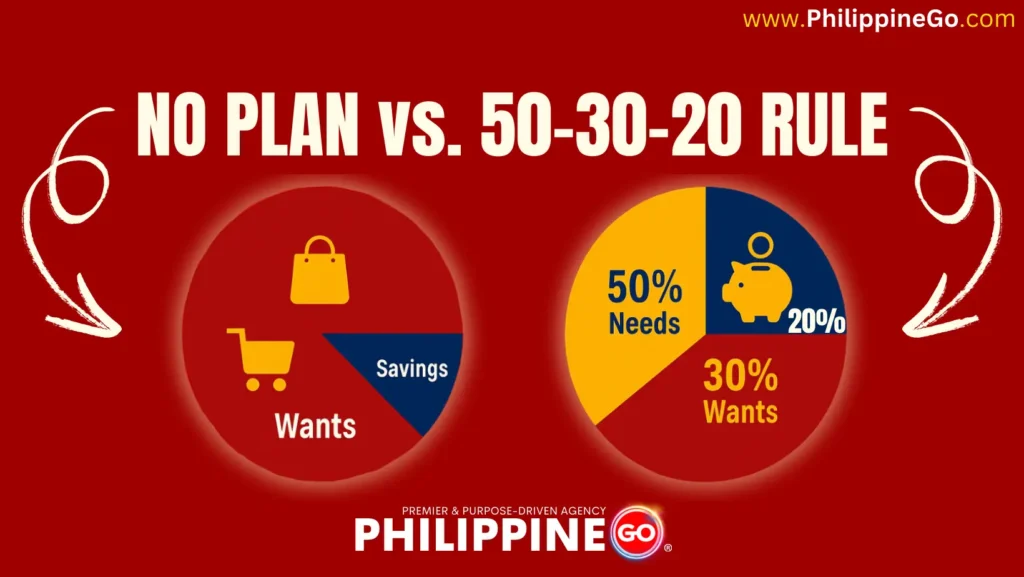
But with a simple budget like the 50-30-20 Rule, your money has a system. You’re not just surviving each month, you’re starting to take control.
Mas madali mag-desisyon. Mas magaan sa isip. Mas relaxed ang future.
That’s why many newly employed Filipinos who started with this method say the same thing: “Kaya pala naming mag-ipon. Hindi lang pala dapat lahat gastos agad.”
And trust us, na-experience din namin maging bagong empleyado. We know how powerful it is when you start handling your finances early.
Related: Basic Financial Skills Every New Worker Needs.
How the 50-30-20 Rule Works
Now that you know why budgeting matters, let’s break it down into simple, practical steps.
Breaking Down the Percentages
Ever heard of “kain lang ng kain” or “bahala na si Batman” spending?
That stops here.
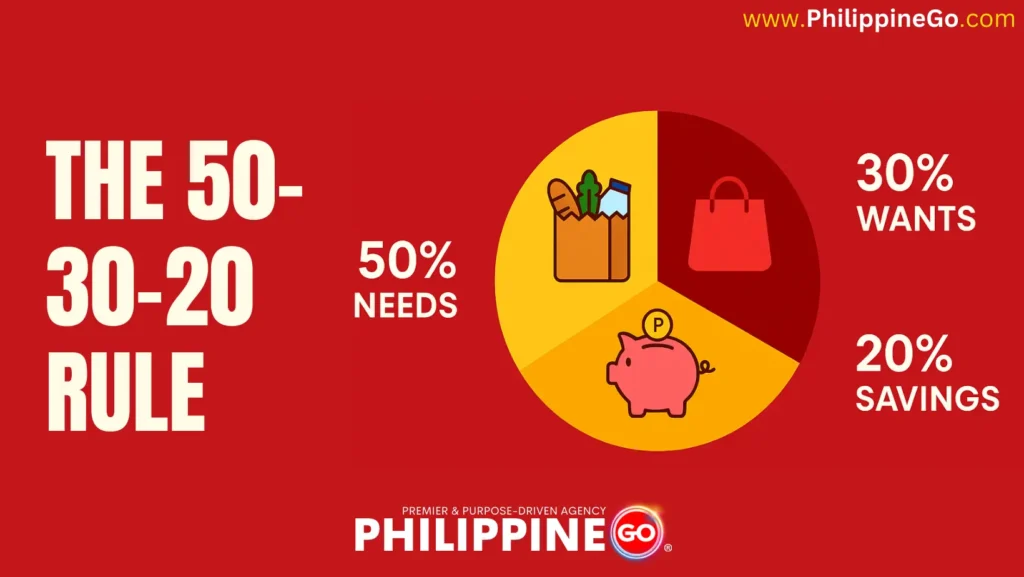
The 50-30-20 Rule is a beginner-friendly way to divide your income. Hindi mo na kailangang mag-excel sheet or maging financial expert para magawa ito.
Ganito lang siya kasimple:
- 50% for Needs: Ito ‘yung non-negotiables like rent, food, transportation, and bills. Example: If your sweldo is ₱15,000, around ₱7,500 goes here.
- 30% for Wants: This is for fun, hobbies, streaming subscriptions, eating out. Hindi mo kailangang alisin ito, just limit it.
- 20% for Savings: Ito ang future mo, like emergency fund, savings goals, and investments later on.
The magic here is balance. Hindi ka nagtitipid ng sobra, pero hindi ka rin nagpapaka-gastos.
Adjusting for Lower Income
Now you might say: “Eh, paano kung sakto lang talaga ang sweldo ko? Parang kulang pa nga.”
Valid ‘yan. And that’s exactly why this rule is flexible.
Kung masyadong maliit ang kita, you can adjust the rule.
Here’s a common tweak for lower earners:
- 60% Needs
- 30% Wants
- 10% Savings
Ang mahalaga, may sinisimulan kang savings habit. Kahit ₱100 lang every cutoff, it’s a start.
You can always increase it later when your income grows.
Recommended to Read: Basic Budget Guide (Para ‘Di Agad Maubos ang Sweldo).
What It Looks Like in Real Life
Now that you understand the formula, the next step is seeing how it works in real situations.
Real-life examples will help you decide how to apply the 50-30-20 rule even if maliit lang ang sweldo mo.
Real Examples You Can Follow
Let’s say may trabaho ka na with a monthly income of ₱15,000 or ₱20,000.
Here’s how the 50-30-20 rule might look like for each:
Sample Budget: ₱15,000 Monthly Income
- 50% Needs (₱7,500)
- Rent / Boarding: ₱3,000
- Food and Groceries: ₱2,500
- Bills (kuryente, tubig, load): ₱2,000
- 30% Wants (₱4,500)
- Netflix / Spotify: ₱400
- Food trip / milk tea moments: ₱1,000
- Hobbies / shopping: ₱3,100
- 20% Savings (₱3,000)
- Emergency Fund: ₱1,500
- Short-term savings: ₱1,500
Sample Budget: ₱20,000 Monthly Income
- 50% Needs (₱10,000)
- Rent / Boarding: ₱4,000
- Food and Groceries: ₱3,000
- Bills (utilities, load, etc.): ₱3,000
- 30% Wants (₱6,000)
- Streaming, Gaming subscription: ₱1,000
- Weekend gala or shopping: ₱2,000
- Self-care / small travel fund: ₱3,000
- 20% Savings (₱4,000)
- Emergency Fund: ₱2,000
- Investment or bank savings: ₱2,000
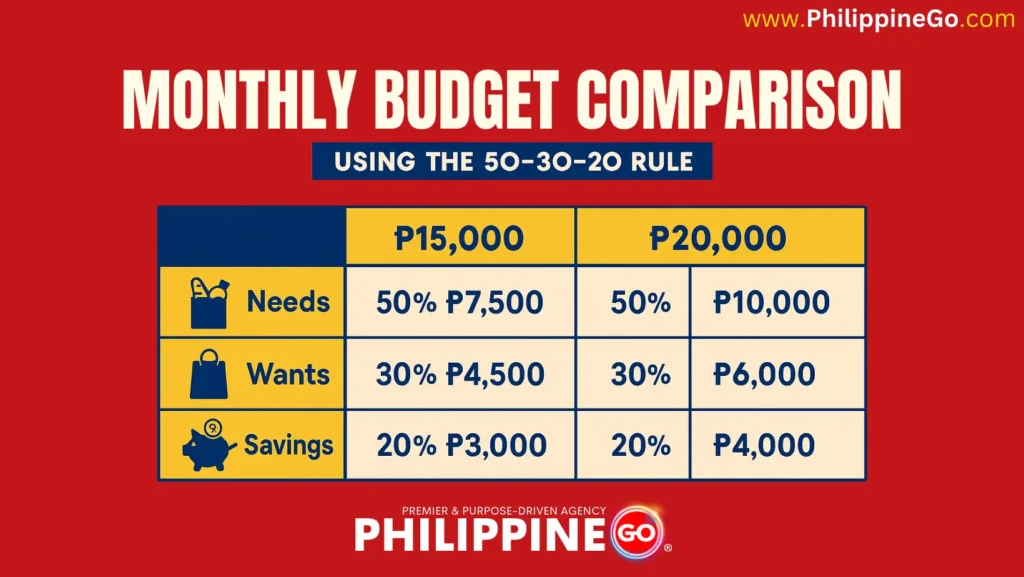
Note: This is just a starting point. Pwedeng iba-iba ito depending on your situation. But having a guide like this gives you structure and peace of mind.
→ Check out How to Plan Your Monthly Expenses Without Stress for a simple guide you can copy.
Want to see if your budget fits the 50-30-20 rule?
Use the calculator below to plan your Needs, Wants, and Savings, and find out how much you can save each month.
Budget Calculator
| Item | Amount (₱) | Action |
|---|---|---|
| Total Needs | ₱0 |
| Item | Amount (₱) | Action |
|---|---|---|
| Total Wants | ₱0 |
| Item | Amount (₱) | Action |
|---|---|---|
| Total Savings | ₱0 |
Summary
Final Thoughts
The 50-30-20 rule isn’t about perfection — it’s about direction. Kahit maliit pa ang kita mo, what matters is starting now.
Hindi kailangan sakto agad ang percentages. The real goal is to build the habit of budgeting while you’re still starting.
We’ve been in your shoes too, and we know this works. Kahit simpleng plan lang, makakatulong ‘yan to reduce stress and gain control over your sweldo.
Up Next: Episode 3
You now know how to divide your sweldo and set a plan. Pero may napansin ka bang kulang sa take-home pay mo?

Episode 3:
- SSS, PhilHealth, Pag-IBIG – Deductions Mo, Saan Napupunta?
In the next episode, we’ll help you decode your payslip, line by line.
Alamin mo kung saan napupunta ang deductions like SSS, PhilHealth, and Pag-IBIG, at paano mo rin sila mapapakinabangan.
References
- Free Budget Planner Worksheet. (n.d.). NerdWallet. https://www.nerdwallet.com/budget-worksheet
- The 50-30-20 budget plan | Metrobank. (n.d.). Www.metrobank.com.ph. https://www.metrobank.com.ph/50-30-20-budget-plan
- 50-20-30 rule for saving money – Philippine National Bank. (2025). Pnb.com.ph. https://www.pnb.com.ph/index.php/rule-saving-money
“Budgeting isn’t limiting your freedom — it’s learning to spend with purpose.”
Philippine Go is with you, every step of the way.